*ino
Designed in Italy · Built on WordLift

Every business needs its *ino.

Not all businesses are the same. Memory is your identity.

*ino is the colleague who knows your company: what you sell, what you promise, how you decide. The one who remembers everything, and asks before it acts. That is how a business becomes AI-native without becoming someone else.

Discover how Name your *ino
Concept rendering of *ino Classica: an ivory desktop object with a red perforated grille and a ring of light, on a travertine desk in a sunlit Milan studio
*ino Classica · Concept rendering
Il suffisso

Three letters that bring things closer.

In Italian, add -ino to a word and it comes nearer. A table becomes the one beside your sofa. A brother becomes the little one you look out for. Add it to your AI colleague and it becomes a *ino: close, trusted, part of the family. The * in front is your memory.

tavolotavolino
fratellofratellino
your AI colleague*ino

Not all businesses are the same.

Two companies can use the same model. What sets them apart is what they know: their customers, their products, their promises, their way of doing things.

A generic assistant forgets all of it. *ino starts from it. Your memory becomes a shared, governed foundation, and every colleague you add works from the same understanding of who you are.

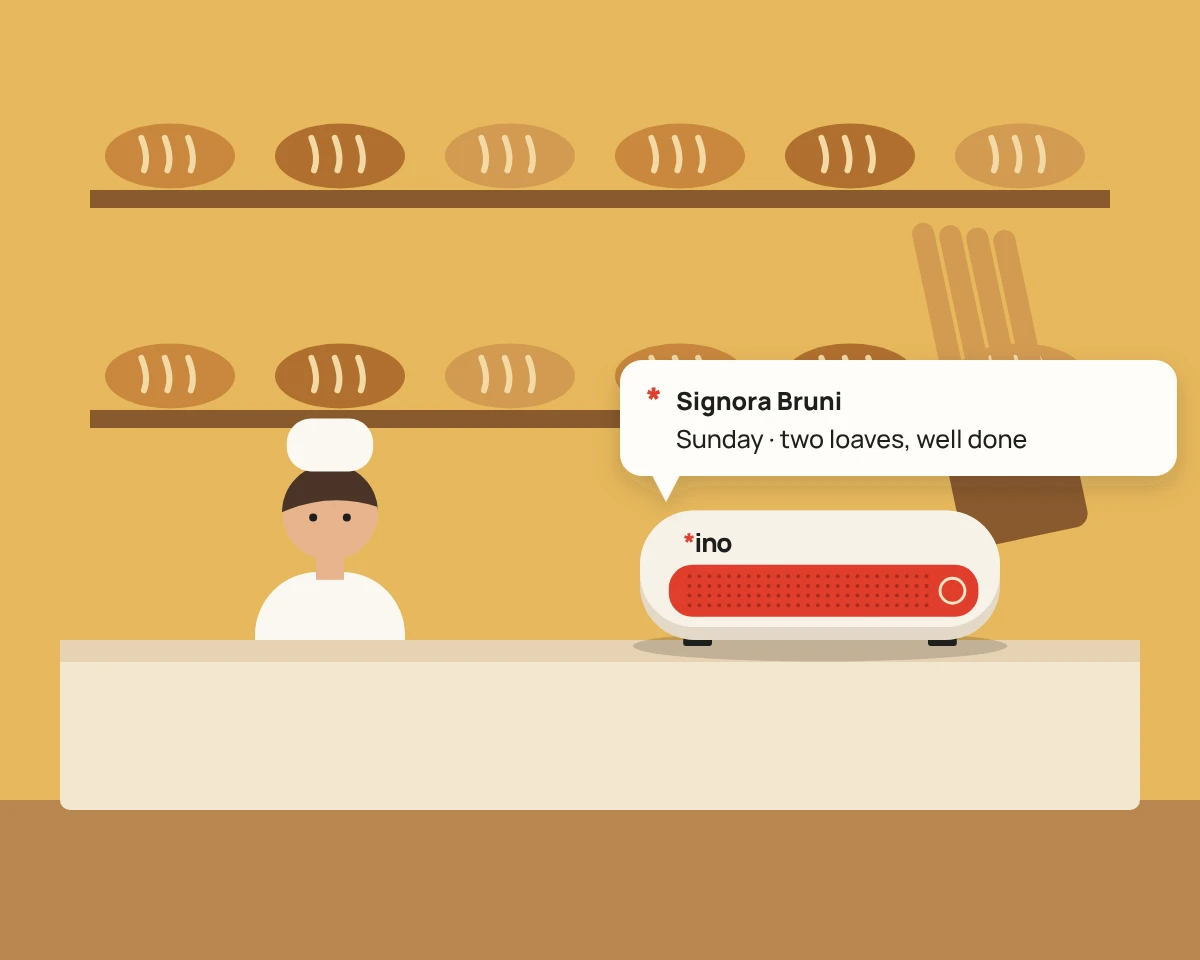
Illustration: a baker behind the counter; the *ino beside the bread remembers Signora Bruni's Sunday order, two loaves, well done
Il fornoThe bakery
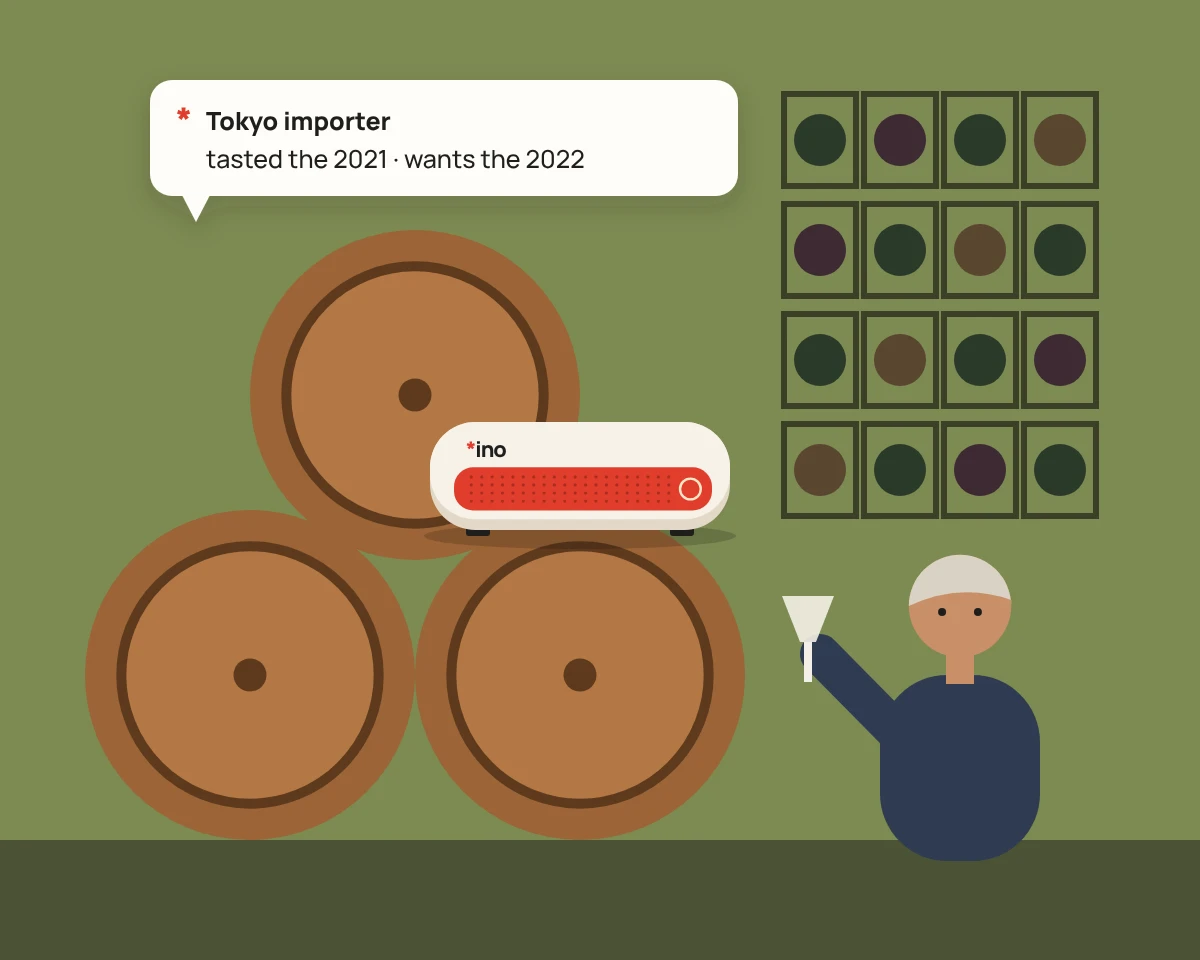
Illustration: a winemaker among barrels; the *ino remembers that the Tokyo importer tasted the 2021 and wants the 2022
La cantinaThe winery
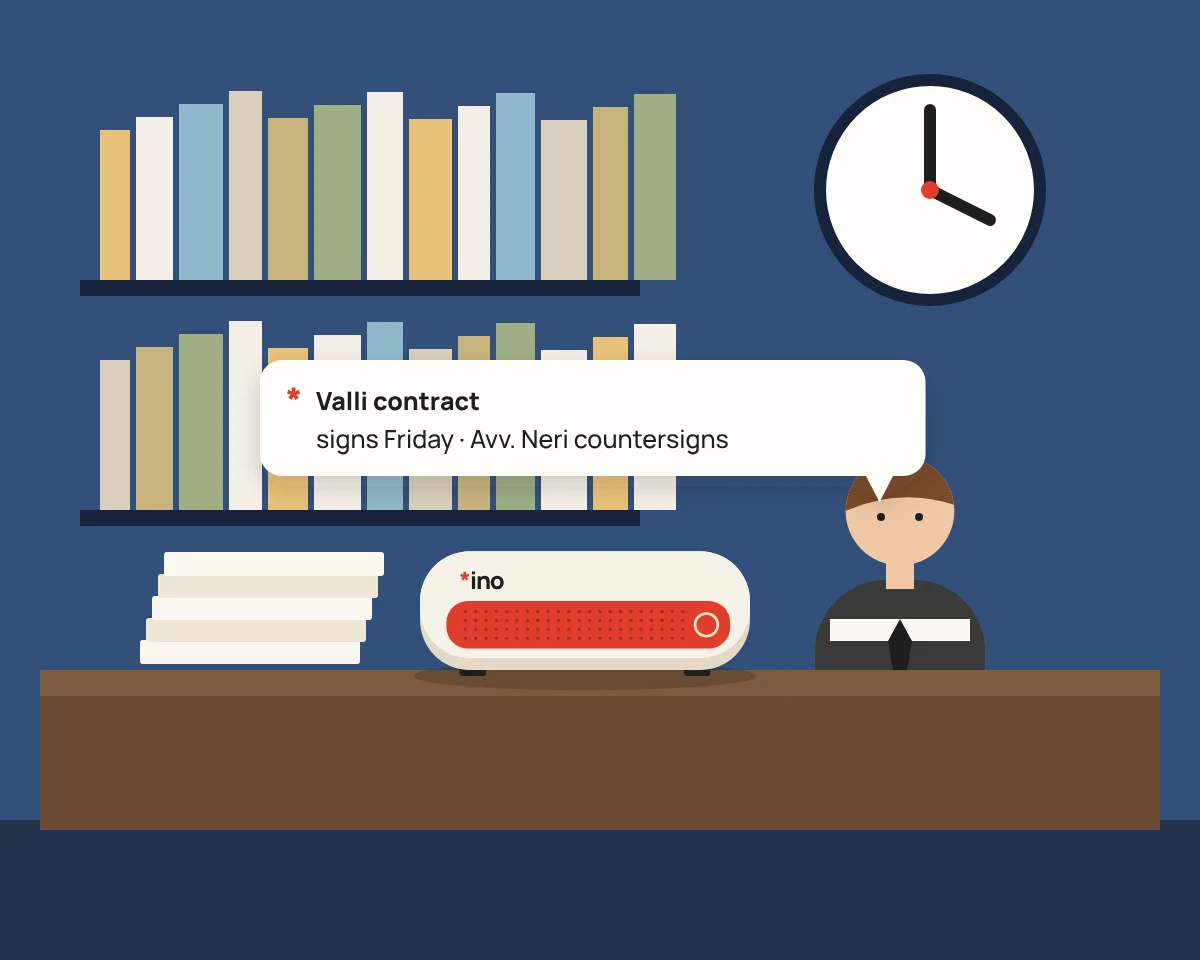
Illustration: a lawyer at a desk with files and a clock; the *ino remembers the contract signs Friday and who countersigns
Lo studioThe law office
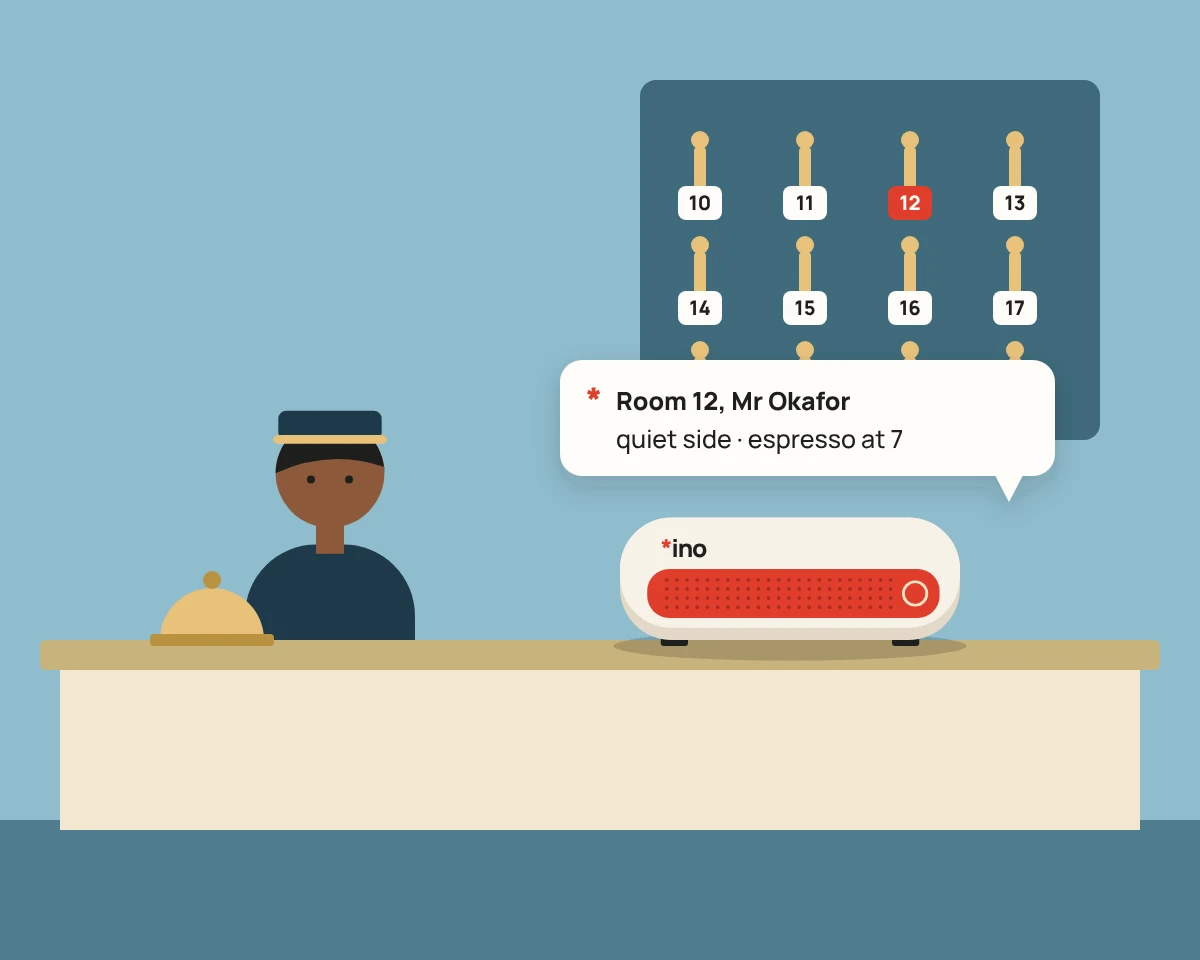
Illustration: a concierge at reception with a key rack; the *ino remembers room 12 likes the quiet side and espresso at 7
L'albergoThe hotel
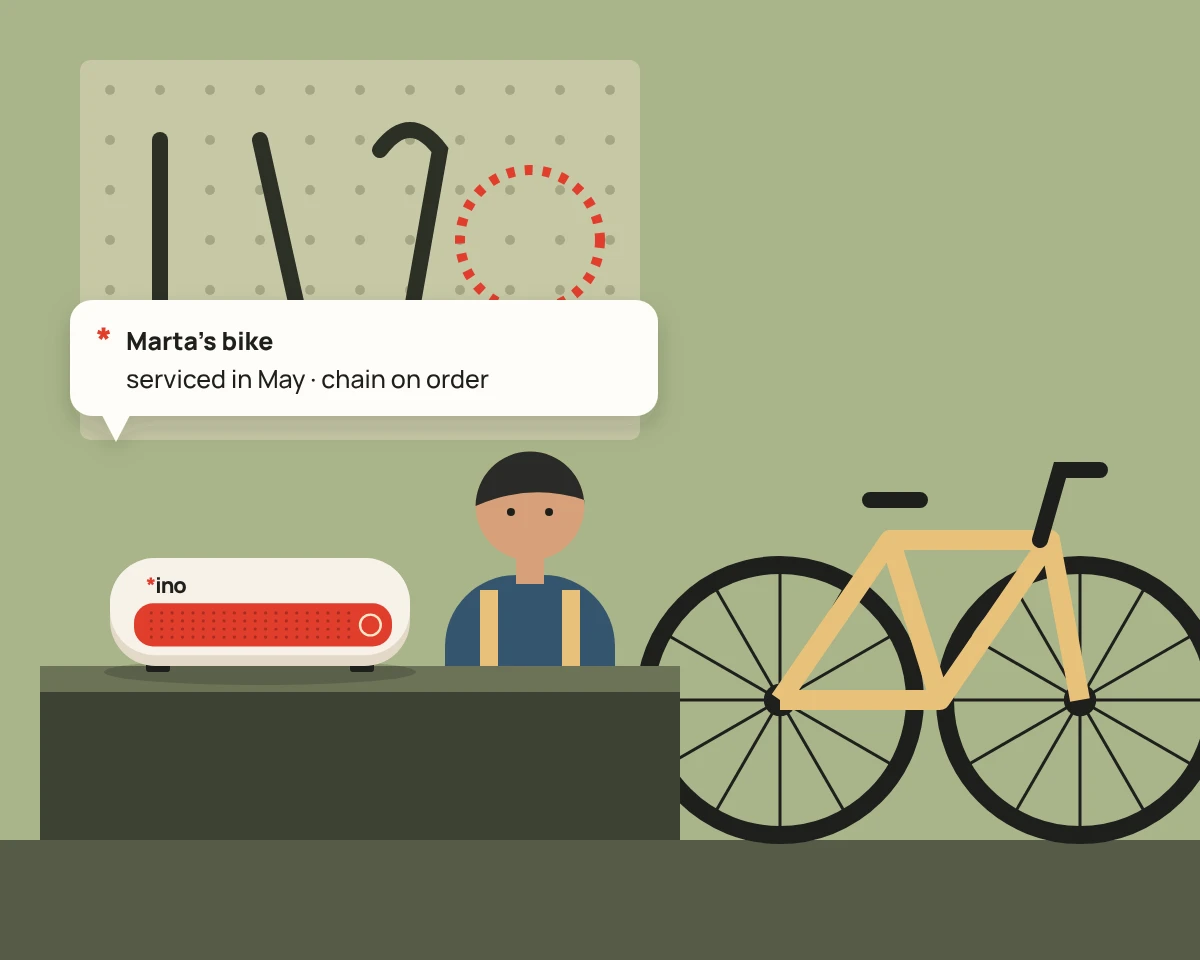
Illustration: a mechanic in a bike workshop; the *ino remembers Marta's bike was serviced in May and a chain is on order
L'officinaThe bike workshop
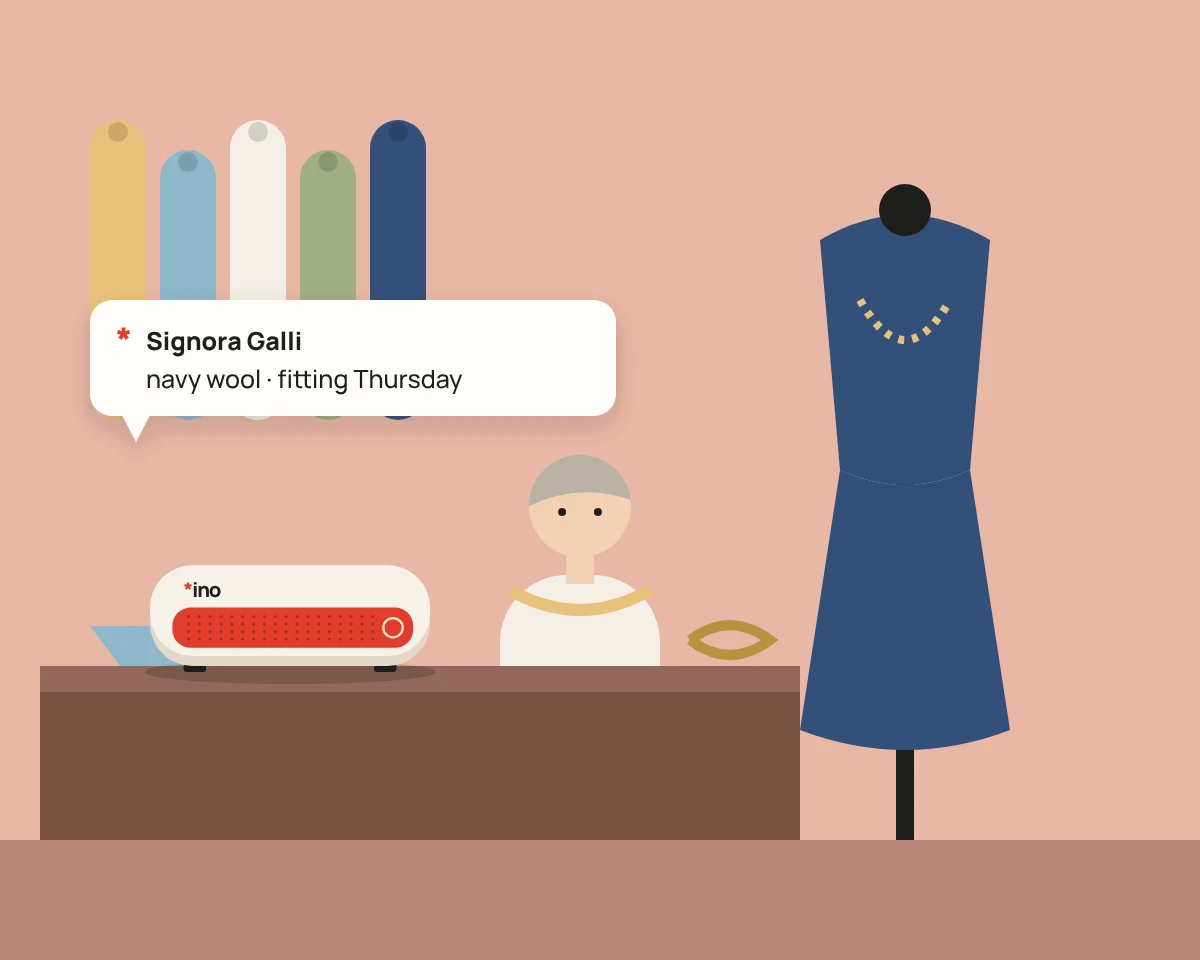
Illustration: a tailor beside a mannequin and fabric rolls; the *ino remembers Signora Galli chose navy wool, fitting Thursday
L'atelierThe tailor

Same family. A different memory.

How it worksThree steps
1
Name it.

Put it on the desk and give it a name. From now on it is a member of the team, not a tab in a browser.

2
Teach it your business.

Your customers, your prices and your way of doing things become its memory and its procedures: what you sell, what you promise, how you work.

3
Give it a job.

Sales, front desk, procurement. It works on that and nothing else, and what matters waits for the person who owns it.

Memory is your identity.

*ino keeps it, protects it, and puts it to work.

You close the shop. It tidies the memory.

A *ino lives on its own small machine on your desk, or in a Docker container on your own servers, so it keeps working when your laptop is closed. Overnight it reads what changed, files what matters and prepares your morning. Anything that needs a decision waits for you.

RinoNight shift Illustrative
  1. 22:14Read three new emails from Valli Arredamenti. Two facts ready for your yes.
  2. 23:40Price list changed: two products updated.
  3. 02:05One contact has left. Their facts wait for your decision.
  4. 06:30Prepared Giulia's Monday pipeline brief.
Waiting for you · 07:00
Ask Marco to approve the Valli price?

It runs on your Business OS.

Connectors bring data in; any tool can do that. What makes a *ino yours is the operating system of your business: what you know, how you do things, and who decides. Written down once, followed every time.

1Memory
What you know.

Customers, products, promises and prices, as canonical memory. Every fact keeps its source, and nothing is kept without a yes.

2Procedures
How you do things.

Your way of preparing a renewal, answering a complaint or taking a booking, written as behaviour specs (BCS). Checked on every task, not hoped for in a prompt.

3Boundaries
Who decides.

Which actions are its own, which wait for the person responsible, and which go to a partner. Clear terms of action, enforced by design.

Renewal Behaviour spec · Rino
WhenA client asks to renew or to change their plan
Read firstLast contract, the terms we agreed, the current price list
NeverQuote a price that is not in the price list
AskThe pricing owner before any new tier or discount
Done whenThe draft is with the account owner, sources attached

Illustrative, simplified from a real *ino spec.

A new colleague learns your procedures in months. A *ino reads them on day one, and never forgets a step.

This is the renewal Rino handled in the film: it read the contract, found the price was missing, and asked Marco. Not because it was clever that day, but because the spec says so.

Not another agent box.

Plenty of machines can run an agent all night. The question is whose business it knows, and whose rules it follows.

An agent computer A *ino
On day one A capable, blank assistant Your business: its memory, procedures and boundaries
Knows how you work Generic skills and plugins Your procedures, as behaviour specs it follows every time
Keeps Whatever it infers along the way Only what someone said yes to, each fact with its source
Acts On its own, until you step in Does the work; decisions wait for the person responsible

One memory. Many colleagues.

Every *ino shares your memory and has its own role, its own permissions, its own temperament. Choose one to meet it.

Rino
Sales & relationships

Remembers what every customer agreed, and never quotes a price it has not been given.

Knows
Accounts, offers, and what each customer agreed
May do
Prepare proposals and draft follow-ups
Asks first
Before anything reaches a customer

Existing template, measured in the Rino memory benchmark.

Your business. Your *ino.

Start with one; the family grows with you. Give yours a name and a role.

Role
*ino Certificato di famiglia
Niino
joins your business in Finance.
Remembers
Your business, not anyone's
Answers to
The people you name
Benvenuto in famiglia. Request Niino

Rino and Lino exist today. The other colleagues are illustrative: what any *ino can do depends on the tools, permissions and behaviour specs you give it.

Good manners, by design.

Since della Casa's Galateo of 1558, Italians have written down how to behave well in company. Every *ino follows four rules.

Sovereignty depends on the deployment and services you configure. Local hardware does not by itself mean fully offline inference; controls are verified per installation.

  1. I
    Asks before it acts.
    Sensitive work waits for the person responsible for it.
  2. II
    Says “I don't know.”
    When your memory is silent, it does not invent an answer.
  3. III
    Names its sources.
    Important answers point back to where they are written.
  4. IV
    Keeps your memory at home.
    You decide where it runs and what is remembered, shared or forgotten.

Nothing kept without a yes. Measured, not claimed.

*ino memoryThe usual way
2.6%
Privacy violations
2.6% vs 14.6% for plain memory told to be careful
0 of 7
Private messages repeated elsewhere
Rino, 0 of 7 vs 5 of 7 without governed memory
42 of 46
Privacy checks built into the memory
42 of 46 vs 20 of 46 for hybrid RAG
99.5%
Right answers, in a working sales colleague
99.5% vs 93.5% without memory · 9.0 s vs 14.4 s

WordLift memory evidence, 5 November 2026. Governed-memory benchmark v2: 47 scenarios, same model for every arm. Privacy checks: CML-Bench, deterministic checks on fictional data, same pass rules for every row. Rino: 31 sales questions × 7 independent runs, right answers +6 pts (95% CI +1 to +12). Rules fixed before running, blind second grader, every loss reported. Limits we report: when a newer fact silently replaces an older one, every system tested, ours included, can still answer with the old value; erasure covers the memory, not copies outside it.

A lineage of meaning.

*ino did not start with a chatbot. It started with years of teaching machines what a business means. That work is the memory every *ino inherits.

  1. The rootsLinked data and the semantic web
  2. The craftWordLift knowledge graphs for publishers, retailers and Fortune 500 brandsThe same craft now behind every *ino: enterprise-grade memory, sized for a family business.
  3. The recognitionSEOntology, Best Student Paper at SEMANTiCS 2026
  4. The first colleaguesRino and Lino, working from canonical memory
  5. Now*ino, for every business
*ino Classica

Small footprint. Serious intelligence.

A dedicated home for your company's knowledge, memory and AI colleagues. Always on, quietly working alongside your team.

Your company. AI-native.

*ino Classica concept rendering: a compact ivory desktop appliance with a red perforated grille on a travertine desk
Concept rendering. Final design requires validation.

Intelligence where it belongs.

Knowledge stays close. Intelligence reaches further.

Your company's canonical memory and semantic indexes live on Classica. EmbeddingGemma 2 transforms information into searchable representations locally. Cloud language models provide reasoning when needed, using context selected according to your organization's permissions and policies.

Built for the everyday

  • Compact enough to sit on a desk.
  • Designed for continuous operation.
  • Accessible through your browser and configured communication channels.
  • Expandable with new colleagues, knowledge sources and business capabilities.
  • No dedicated GPU required for the planned configuration.
Machine
AMD Ryzen 5 · 32 GB · 1 TB NVMe · Linux
Memory
WoGraph knowledge graph, on the machine
Search
Graph search over entities and relations; embeddings computed locally
Reasoning
Cloud language models, with only the context your permissions allow
Privacy
Local memory, consent controls, role-based access
Connects
Ethernet, Wi-Fi · voice and telephony optional

Planned configuration; indicative.

A physical home for your company's AI colleagues.

Choose where your memory lives.

Every edition comes with Business+: the memory, your colleagues, messages included, and WordLift's experts at your side. One price for the whole team, no per-seat fees.

Classica

Essenziale.

A considered object on your desk, and a dedicated home for your first colleague.

Business+ · €799 / month billed yearly · €999 monthly
  • The Classica machine, €1,490 once
  • Up to 3 colleagues · 25 people
  • 3,000 messages a month · updates by us
More messages with Smart Credits. Indicative; excl. VAT. See specifications
Enquire
*Coming soon

Maestro

Più capacità. Più autonomia.

More local computing, for a business that keeps more of its thinking at home.

€5,990 indicative · excl. VAT
  • Local inference, once WoLM Local is validated on the hardware
  • Credits then pay only for the hosted fallback
Concept price. Performance not yet validated.
Tell me when it arrives

Self-Hosted

Nella tua infrastruttura.

Your *ino in infrastructure you operate, with Docker deployment and governance configured for your environment.

Business+ Self-Hosted · €299 / month billed yearly · €379 monthly
  • Docker on your server, 16 GB recommended
  • 1 colleague · 10 people
  • 1,000 messages a month · signed releases
More messages with Smart Credits. Indicative; excl. VAT. Your operator runs updates, or we do it as a service.
Enquire

Questions, answered plainly.

What exactly is a *ino?

A colleague with one job in your business, working from your company's memory. You talk to it like a person on the team; it prepares, drafts, answers and remembers, and it asks before anything leaves the building.

How is it different from ChatGPT or Claude?

They are brilliant generalists, built to remember on their own. In an independent study of 12,112 donated ChatGPT memories, only 0.6% had been saved because the user asked; the rest were inferred, including health crises and facts about other people. For three of the four leading assistants, the vendors' own documentation says memories derived from a chat stay after you delete it. None asks consent for each memory or keeps a source for every fact.

A *ino is privacy-centred by design: nothing is kept without a person's yes, every fact keeps its source, private messages stay private, and erasing a fact removes its summary too.

Sources: independent study of donated ChatGPT memories; vendor help centres and documentation for ChatGPT, Claude and Gemini Enterprise, checked November 2026.

Where does the memory live?

In a knowledge graph that belongs to you: on your *ino, or in your own infrastructure with Self-Hosted. You decide what is remembered, shared or forgotten.

Will it remember things I didn't want kept?

No. It keeps a fact only after the person it concerns says yes, and a colleague's yes never stands in for someone else's. Personal health details are never kept. What you say in a private message stays out of other conversations, and text pasted in from the web or another bot is not stored as fact.

Can it act on its own?

It can prepare almost anything. What changes your systems, or reaches a customer, waits for the person responsible for it.

What does it cost?

A *ino comes with WordLift Business+, from €799 a month billed yearly. Classica adds the machine, €1,490 once, and carries up to three colleagues, 25 people and 3,000 messages a month. Self-Hosted is €299 a month billed yearly, with no machine, and carries one colleague, 10 people and 1,000 messages. Beyond the allowance, Smart Credits: one credit, €75, is 300 messages, and the *ino tells you before it starts anything that counts for more than a few. Prices are indicative until launch.

Travertine arcades in raking light against a red wall; concept architectural photography

Become AI-native. Stay yourself.

Tell us about your business. We will design your first *ino together: its memory, its role, its manners.

Enter the register Name your *ino
*ino · Sign in

Go to your *ino.

Your company's address is in your invitation. You sign in there, with a code sent to your work email.